
Health Library
Sudden Crashing Fatigue in Females: Why It Happens and What to Do
February 21, 2026
Question on this topic? Get an instant answer from August.
If you are a woman and you suddenly feel so exhausted that you can barely function, you are not imagining it. Sudden crashing fatigue that overwhelming wave of tiredness that hits without warning. It can feel like your body just shuts down, even if you slept well and have not done anything physically draining.
This type of fatigue different from normal tiredness. It does not improve with rest. And it often has an underlying cause that can be identified and treated.
What Does Sudden Crashing Fatigue Feel Like?
It usually comes on quickly. One moment you feel fine, and next you feel like you cannot keep your eyes open or your thoughts together.
You may feel heavy, foggy, and disconnected. Simple tasks like cooking, driving, or even holding a conversation can feel overwhelming. Some women describe it as "hitting a wall" or "running out of battery" with no warning.
This kind of fatigue your body sending a signal. Something out of balance, and it is worth figuring out what that is.
Could It Be Iron Deficiency?
Iron deficiency is one of most common causes of sudden fatigue in women. And here what many people do not realize: you can be iron deficient without being anemic.
Iron is essential for making hemoglobin, protein in red blood cells that carries oxygen throughout your body. When iron low, your muscles, brain, and organs do not get oxygen they need. The result fatigue that can feel crushing and sudden.
Women of reproductive age are especially vulnerable because of monthly blood loss through menstruation. Heavy periods, pregnancy, breastfeeding, and restrictive diets all increase risk.
A research review on iron deficiency without anemia notes that this condition is often missed because standard blood tests like hemoglobin may still appear normal. The key marker to check is ferritin, which measures your stored iron. Even when hemoglobin looks fine, low ferritin can cause significant fatigue, brain fog, and muscle weakness.
If you suspect low iron or low B12 might be behind your fatigue, read this on recovering from vitamin B12 deficiency explores how long it takes to feel better.
Is Your Thyroid Involved?
An underactive thyroid (hypothyroidism) is another very common cause of sudden fatigue in women. Your thyroid gland controls your metabolism. When it slows down, everything slows down with it.
Hypothyroidism can cause deep exhaustion that does not improve with sleep. You may also notice weight gain, dry skin, hair thinning, feeling cold all time, constipation, and difficulty concentrating.
Hashimoto's thyroiditis, an autoimmune condition, is most common cause of hypothyroidism. It tends to develop gradually, but fatigue can feel sudden when hormone levels drop past a tipping point.
A simple blood test measuring TSH, free T4, and thyroid antibodies can identify problem. Treatment with thyroid hormone replacement often brings significant relief.
Interestingly, iron deficiency and thyroid problems often occur together. A systematic review on iron deficiency and thyroid function found that iron deficiency can impair thyroid function because iron is needed for enzyme that helps produce thyroid hormones. So treating one without checking for other can leave you feeling stuck.
Could Hormonal Changes Be Cause?
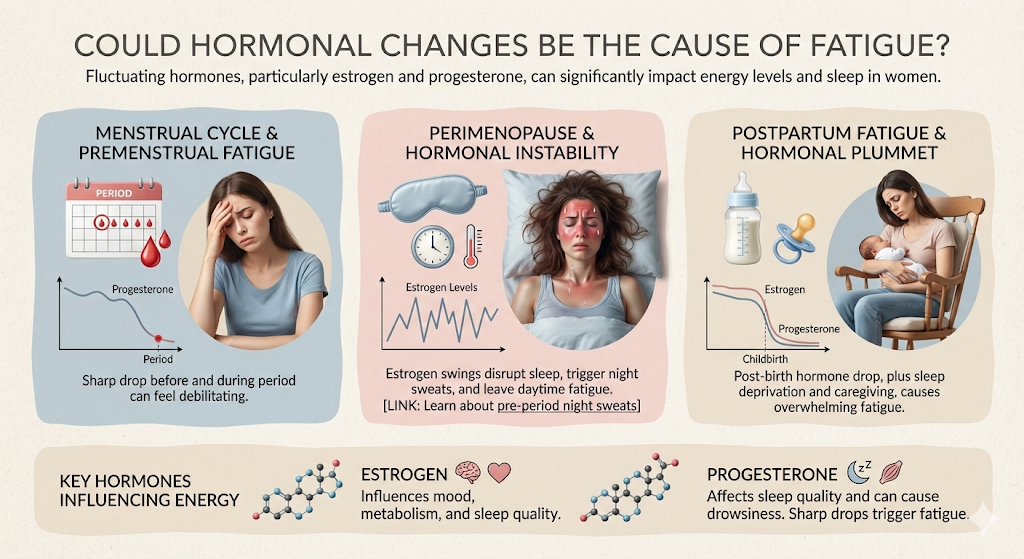
Fluctuating hormones are a major driver of sudden fatigue in women. Estrogen and progesterone influence energy levels, sleep quality, mood, and metabolism. When these hormones shift rapidly, fatigue can follow.
This is especially common during certain phases of menstrual cycle. Many women notice a dip in energy right before or during their period, when progesterone drops sharply. Premenstrual fatigue real and can feel debilitating for some women.
Perimenopause, years leading up to menopause, brings even more hormonal instability. Estrogen levels can swing dramatically from one day to next. This can disrupt sleep, trigger night sweats, and leave you feeling wiped out during day. If hormonal shifts at night are affecting your rest, read this on why women get night sweats before their period may help you connect dots.
Postpartum fatigue another hormonal cause. After childbirth, estrogen and progesterone plummet. Combined with sleep deprivation and physical demands of caring for a newborn, fatigue can feel overwhelming.
Are Blood Sugar Crashes Playing a Role?
Reactive hypoglycemia, where blood sugar drops too quickly after eating, can cause episodes of sudden crashing fatigue. This often happens two to four hours after a meal, especially one high in refined carbohydrates or sugar.
When blood sugar spikes and then crashes, your body responds with a wave of exhaustion, shakiness, irritability, and difficulty thinking clearly. Women with insulin resistance, polycystic ovary syndrome (PCOS), or prediabetes may be more prone to these episodes.
Eating balanced meals with protein, healthy fats, and complex carbohydrates can help stabilize blood sugar and prevent those energy crashes throughout day.
Could Stress or Mental Health Be a Factor?
Chronic stress keeps your cortisol levels elevated. Over time, this can exhaust your adrenal system and leave you feeling completely drained. The fatigue from prolonged stress can hit suddenly, often when stress temporarily eases and your body finally lets its guard down.
Depression and anxiety also cause profound fatigue. Depression related tiredness feels heavy and persistent. Anxiety related fatigue often comes from constant state of alertness your body maintains, which uses up enormous amounts of energy.
If your fatigue comes with persistent sadness, loss of interest in things you used to enjoy, excessive worry, or changes in appetite, speaking with a healthcare provider can help.
Are There Rare but Serious Causes?
In most cases, sudden crashing fatigue has a treatable explanation. But a few less common conditions are worth knowing about.
Chronic fatigue syndrome (also called myalgic encephalomyelitis) causes extreme tiredness that does not improve with rest and not explained by another medical condition. It often follows a viral infection and includes symptoms like muscle pain, difficulty concentrating, and unrefreshing sleep.
Autoimmune conditions like lupus, rheumatoid arthritis, or multiple sclerosis can cause waves of sudden fatigue. These conditions involve immune system attacking body's own tissues, which takes a toll on energy.
Undiagnosed diabetes can cause fatigue when blood sugar is poorly regulated. Heart conditions, kidney disease, and certain cancers can also present with unexplained tiredness as an early symptom.
If your fatigue persistent, severe, or accompanied by other symptoms like unexplained weight loss, joint pain, or shortness of breath, see your doctor for a thorough evaluation.
Bottom Line
Sudden crashing fatigue in women not something to push through or dismiss. It often points to something specific like iron deficiency, thyroid dysfunction, hormonal shifts, or blood sugar instability. Simple blood tests can uncover many of these causes. If fatigue persistent or severe, getting evaluated early gives you best chance of finding relief and feeling like yourself again.
Health Companion
trusted by
6Mpeople
Get clear medical guidance
on symptoms, medications, and lab reports.