
Health Library
Nitrofurantoin Interactions: What Can and Can't Mix Safely
February 23, 2026
Question on this topic? Get an instant answer from August.
Nitrofurantoin is an antibiotic used to treat urinary tract infections (UTIs). You may know it by its brand names Macrobid or Macrodantin. It works by killing bacteria in urinary tract, and it has been doing that reliably since 1950s. But like any medication, nitrofurantoin can interact with other drugs, supplements, and even certain foods in ways that affect how well it works or how safe it is for you.
Do Antacids Affect Nitrofurantoin?
Yes, and this is one of most important interactions to know about. Antacids that contain magnesium trisilicate can reduce how much nitrofurantoin your body absorbs. According to FDA-approved prescribing information published on DailyMed, a drug label database run by U.S. National Library of Medicine, magnesium trisilicate binds to nitrofurantoin in stomach and prevents it from being absorbed properly. You can review full prescribing details here: Nitrofurantoin Drug Label
In practical terms, this means less of drug reaches your urinary tract. And if not enough medication gets where it needs to go, infection may not clear up.
If you regularly take an antacid for heartburn or indigestion, let your doctor or pharmacist know before starting nitrofurantoin. They can help you choose an antacid that does not contain magnesium trisilicate, or they can adjust timing of your doses to reduce overlap.
Can Gout Medications Interfere With Nitrofurantoin?
Yes. Uricosuric drugs, which are medications used to treat gout, can cause a meaningful interaction. The two most commonly mentioned are probenecid and sulfinpyrazone.
These drugs work by helping your kidneys push out more uric acid. But in doing so, they also block kidneys from excreting nitrofurantoin into urine. This creates two problems at once. First, nitrofurantoin builds up in your blood, which raises risk of side effects and toxicity. Second, less of drug ends up in your urine, which is exactly where it needs to be to fight UTI.
This a case where interaction does not just reduce effectiveness. It can also make medication less safe. If you take gout medication, your doctor may choose a different antibiotic or adjust your treatment plan.

Does Nitrofurantoin Interact With Other Antibiotics?
This a lesser-known interaction, but it worth mentioning. Research has shown that nitrofurantoin and quinolone antibiotics (like ciprofloxacin or levofloxacin) can work against each other in lab settings. This called antagonism, where one drug reduces effectiveness of other.
The clinical significance of this interaction in real-world use still unclear. But your doctor unlikely to prescribe both at same time for this reason. If you are currently taking a quinolone antibiotic and your doctor considering adding nitrofurantoin, they will weigh risks carefully.
If you are curious about how UTI antibiotics compare and when one might be chosen over another, this two popular options: Bactrim vs Macrobid for UTI
What About Birth Control Pills?
Many people wonder whether antibiotics affect hormonal birth control. With nitrofurantoin specifically, there no strong evidence that it reduces effectiveness of birth control pills. This different from certain other antibiotics like rifampin, which can interfere with how oral contraceptives work.
That said, if a UTI causes vomiting or severe diarrhea, your body may not absorb birth control pill as well as it normally would. In that case, issue is illness itself rather than antibiotic. Using a backup method of contraception during a UTI is a reasonable precaution, and your doctor can help you decide what makes sense.
Does Food Affect How Nitrofurantoin Works?
Interestingly, yes, and in a helpful way. Unlike many medications that should be taken on an empty stomach, nitrofurantoin actually absorbs better when you take it with food. Eating slows down emptying of your stomach, which gives medication more time to dissolve and be absorbed.
Taking nitrofurantoin with a meal or snack can also help reduce stomach upset, which is one of its more common side effects. So if your doctor tells you to take it with food, this why.
Can Nitrofurantoin Affect Lab Tests?
Yes, and this is something people often overlook. Nitrofurantoin can cause a false positive result on certain urine glucose tests. If you have diabetes and test your urine for sugar, older copper-based testing methods (like Benedict's or Fehling's solutions) may give you an inaccurate reading while you are on this medication.
The glucose-specific enzyme tests used in most modern strips are not affected. But it is worth mentioning to your doctor or pharmacist so they can confirm which testing method you use.
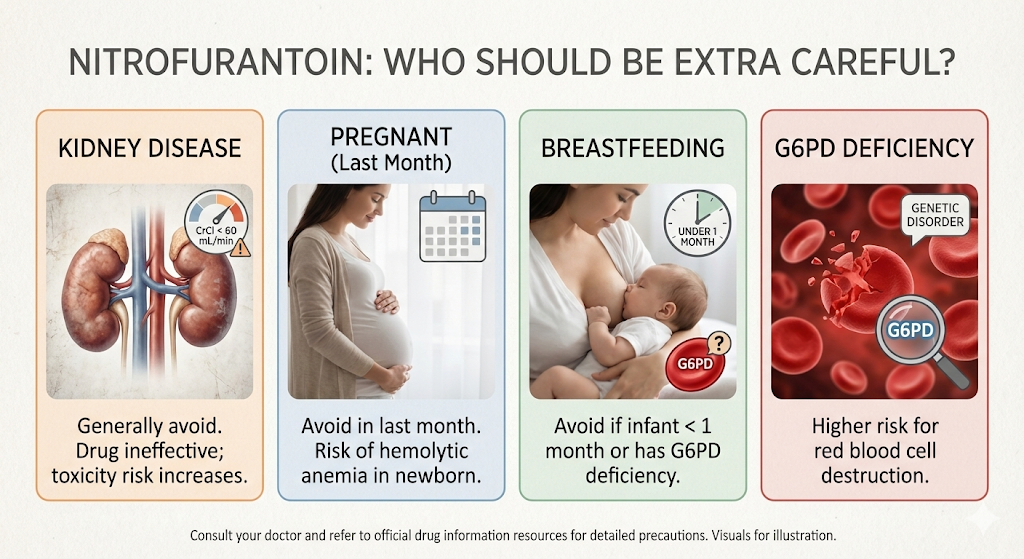
Who Should Be Extra Careful With Nitrofurantoin?
Beyond drug interactions, some people need to avoid nitrofurantoin altogether or use it with extra caution. According to U.S. National Library of Medicine, your doctor should know if you have kidney disease, liver problems, anemia, diabetes, lung conditions, or nerve damage before prescribing this medication. You can find a detailed list of precautions from this government drug information resource: Nitrofurantoin
Here are some important groups to be aware of:
- People with kidney disease (creatinine clearance under 60 mL per minute) should generally avoid nitrofurantoin because drug will not reach effective levels in urine and risk of toxicity goes up.
- Pregnant women in last month of pregnancy should avoid it because of risk of hemolytic anemia in newborn.
- Breastfeeding mothers should not use it if their infant is under one month old or has G6PD deficiency.
- People with G6PD deficiency (a genetic enzyme disorder) are at higher risk for red blood cell destruction when taking this drug.
If you are currently figuring out right dosage or duration for your UTI treatment, this resource explains how long nitrofurantoin is typically taken and what to expect: How Long to Take Nitrofurantoin for a UTI
Bottom Line
Nitrofurantoin is a well-established and effective antibiotic for uncomplicated UTIs. But knowing its interactions can help you use it safely and get best results. The two biggest interactions to remember are antacids containing magnesium trisilicate (which reduce absorption) and gout medications like probenecid (which raise blood levels and lower urinary levels).
Always share your full medication list with your doctor and pharmacist before starting nitrofurantoin. That includes prescription drugs, otc products, vitamins, and supplements.
Health Companion
trusted by
6Mpeople
Get clear medical guidance
on symptoms, medications, and lab reports.