
Health Library
Flu Shot Side Effects: What’s Normal and How to Feel Better Fast
December 23, 2025
Question on this topic? Get an instant answer from August.
TL;DR:
- Common side effects like arm pain, headache, and fatigue are mild and temporary, usually lasting 24-48 hours
- The flu shot cannot give you the flu it contains inactive virus that triggers protective immunity
- Simple remedies like moving your arm, applying pressure, and taking OTC pain relievers can ease discomfort quickly
Getting your flu shot shouldn’t feel scary. Yes, you might experience some discomfort afterward, but knowing what to expect makes it easier.
Let’s talk about what’s actually normal and how to handle it.
What is the flu shot and how does it work?
The flu vaccine teaches your body to fight off influenza viruses.
It’s made with killed (inactivated) viruses that can’t make you sick, or with proteins from flu viruses. Your immune system sees these harmless particles and creates antibodies your body’s defense team.
The nasal spray version uses weakened live viruses that are cold adapted, meaning they only work in your nose’s cooler temperatures and can’t reproduce in your lungs.
You need a new shot each year because flu viruses change constantly. Last year’s vaccine won’t protect you against this year’s strains.
What are normal flu shot side effects?
Most people experience mild reactions that go away on their own.
The most common flu shot side effects include:
Soreness, redness, and swelling at the injection site are the top complaints.
You might also notice headache, muscle aches, or feeling tired.
Some people run a low grade fever or lose their appetite for a day or two.
Why these reactions happen:
Your immune system is doing its job. When it detects the vaccine, it kicks into gear and creates those protective antibodies.
That process causes inflammation which feels like soreness and achiness.
Think of it as your body’s workout. A little discomfort now means protection later.
What timeframe to expect:
Side effects are mild and disappear on their own in a few days without treatment.
Most symptoms show up within 24 hours of getting vaccinated.
They typically fade within 48 hours.
Can you get the flu from a flu shot?
No. This is impossible.
The viruses in a flu shot are killed (inactivated), so you cannot get flu from a flu shot.
Even the nasal spray uses viruses so weakened they can’t cause illness.
Why you might feel unwell:
If you feel sick after your shot, it’s likely because your immune system is responding to the vaccine. This is different from actually having the flu.
You also might have been exposed to the flu before getting vaccinated. It takes two weeks for full protection to develop.
Sometimes people catch a cold or other virus around the same time as their flu shot and blame the vaccine.
My arm hurts after the flu shot, is this normal?
Yes, arm pain is the most common reaction.
Why injection site pain occurs:
The needle goes into your muscle, causing minor tissue damage. Your immune system rushes white blood cells to that spot, creating inflammation.
This is actually good it means your body is responding to the vaccine.
What’s considered normal:
Soreness that makes it uncomfortable to lift your arm is typical.
Mild redness or a small lump at the injection site is fine.
Some people notice warmth or slight swelling.
How long arm pain typically lasts:
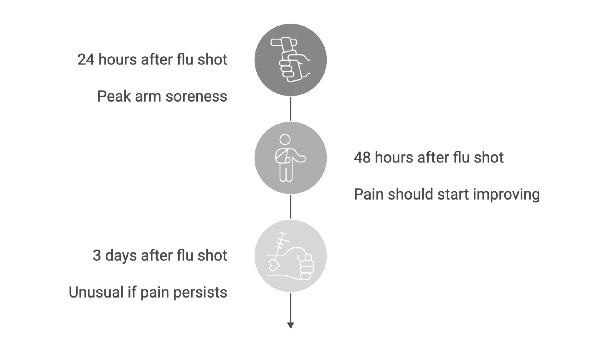
Most arm soreness peaks within 24 hours and fades by day two.
If it’s still bothersome after three days, that’s unusual.
When to be concerned:
Severe swelling that spreads down your arm needs medical attention.
Pain that gets worse instead of better after 48 hours should be checked.
If you can’t move your arm at all or have signs of infection (hot skin, red streaks, pus), call your doctor.
How can you manage flu shot side effects?
For arm soreness:
Apply gentle pressure right after the injection for about two minutes. Don’t rub or massage the area.
Keep your arm moving. Do arm circles, reach overhead, or go about your normal activities. Movement prevents stiffness.
Try a cold compress for 15-20 minutes if it’s really sore. Wrap ice in a towel never apply it directly to skin.
Do light arm stretches throughout the day.
For body aches and headache:
Take over the counter pain relievers like ibuprofen or acetaminophen. Follow the package directions.
These work best if you take them when symptoms start rather than waiting until pain is severe.
Rest when you need to, but you don’t have to stay in bed all day.
Stay hydrated drink water, tea, or clear broth.
For fatigue:
Give yourself permission to take it easy for 24 hours. Skip the intense workout.
Get extra sleep if your body asks for it.
Drink plenty of fluids.
Listen to your body if you’re exhausted, rest.
When should you contact your doctor?
Most side effects handle themselves. But sometimes you need help.
Call 911 immediately if you see signs of a severe allergic reaction: hives, swelling of the face and throat, difficulty breathing, a fast heartbeat, dizziness, or weakness.
This is rare but serious.
Contact your doctor if you have:
High fever (over 103°F) that lasts more than two days.
Severe pain that isn’t improving or is getting worse.
Unusual symptoms like vision changes, ringing in ears, or confusion.
Any reaction that concerns you.
Are there serious side effects to watch for?
Some studies have found a possible small association of injectable flu vaccine with Guillain Barré syndrome (GBS), estimated as fewer than 1 or 2 cases per one million people vaccinated.
This nerve disorder is extremely rare.
GBS is more common following flu illness than following flu vaccination.
Young children who get the flu shot along with pneumococcal conjugate vaccine or DTaP vaccine at the same time might be slightly more likely to have a seizure caused by fever.
Tell your doctor if your child has ever had a seizure.
Severe allergic reactions can happen with any vaccine but are very rare.
Is it still worth getting vaccinated despite side effects?
Absolutely yes.
If you do get the flu after vaccination, it may be less severe.
The vaccine reduces your risk of hospitalization and serious complications.
Each year, thousands of people die from flu complications. The vaccine prevents many of these deaths.
A day or two of mild soreness beats weeks of flu misery. Flu symptoms include high fever, severe body aches, exhaustion, and cough that can last for weeks.
You also protect people around you babies, elderly relatives, and those with weak immune systems who can’t get vaccinated or don’t respond well to vaccines.
Conclusion
Flu shot side effects are usually mild and short lived. A sore arm or mild headache for a day is worth the protection against serious flu illness. Schedule your vaccine today and protect yourself and your loved ones this flu season.
Health Companion
trusted by
6Mpeople
Get clear medical guidance
on symptoms, medications, and lab reports.