
Health Library
Does Creatine Increase Testosterone? What Research Shows
February 23, 2026
Question on this topic? Get an instant answer from August.
If you have heard that creatine can boost your testosterone levels, you are not alone. This claim gets repeated often in fitness circles and supplement marketing. But when you look at actual research, answer is pretty clear. Creatine does not appear to have meaningful effect on testosterone.
That does not mean creatine is useless. It one of most studied and effective supplements for exercise performance. It just works through completely different pathway than hormones.

What Does Creatine Actually Do in Your Body?
Creatine is a natural compound your body already makes. Your liver, kidneys, and pancreas produce it from amino acids. You also get it from foods like red meat and fish.
Once creatine enters your muscles, it gets converted into phosphocreatine. This stored form of energy helps your muscles produce ATP (adenosine triphosphate), which is fuel your cells use during short bursts of intense activity. Think sprinting, heavy lifting, or explosive movements.
So creatine works at energy level inside your muscle cells. It helps you push harder during workouts and recover faster between sets. This is very different mechanism from how testosterone works, and that distinction matters when we talk about hormone claims.
What Does Research Say About Creatine and Testosterone?
A large review published through National Institutes of Health looked at 12 studies that measured testosterone levels during creatine supplementation. Doses in these studies ranged from 3 to 25 grams per day and lasted anywhere from 6 days to 12 weeks.
Here is what they found:
- Ten out of twelve studies showed no change in total testosterone levels.
- Two studies reported small increases, but researchers described these as too small to have any real physiological effect.
- Five of those studies also measured free testosterone (form your body actively uses), and none of them found an increase.
You can read full breakdown of that research through National Institutes of Health here: Creatine Supplementation Misconceptions and Evidence
So weight of evidence is quite consistent. Creatine supplementation does not raise testosterone in any clinically significant way.
What About DHT? The Study That Started Myth
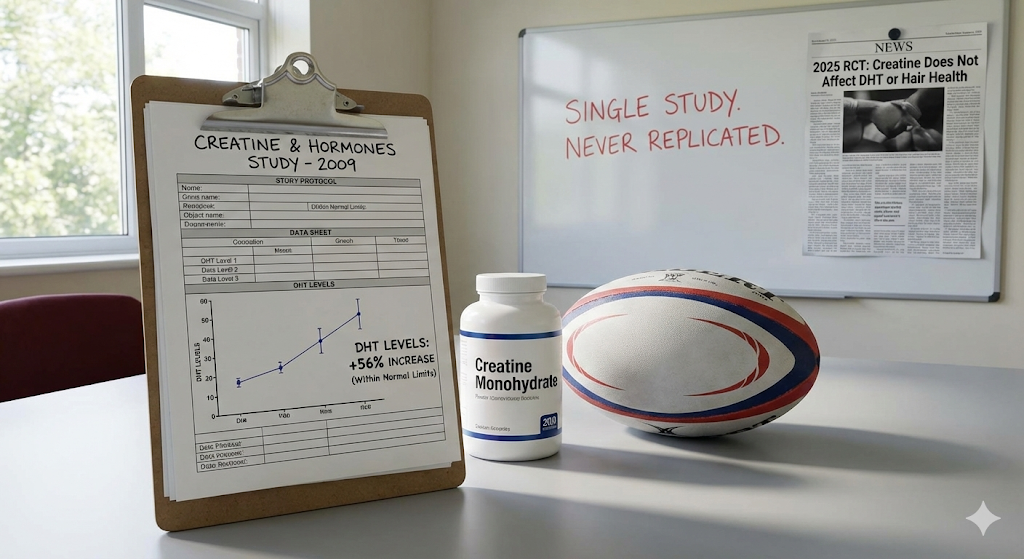
Much of confusion around creatine and hormones comes from a single study conducted in 2009 involving college-aged rugby players. That study found that creatine loading (25 grams per day for 7 days followed by maintenance dose) increased dihydrotestosterone (DHT) by about 56 percent after loading phase.
DHT is a more potent form of testosterone. Your body makes it when an enzyme called 5-alpha-reductase converts free testosterone into DHT. Because DHT can bind to hair follicle receptors and cause shrinkage in people who are genetically predisposed, this study also sparked popular myth that creatine causes hair loss.
But here is important context. That single study has never been replicated. No other research team has found same DHT increase. And DHT levels in that study, even after increase, stayed within normal clinical limits. The creatine group also started with lower baseline DHT than placebo group, which partly explains why percentage jump looked dramatic.
A 2025 randomized controlled trial specifically designed to test whether creatine affects DHT and hair health found no changes in DHT levels, DHT to testosterone ratio, or any measure of hair follicle health after 12 weeks of daily creatine use.
If Creatine Does Not Boost Testosterone, Why Does It Build Muscle?
This is a great question, and answer is straightforward. Creatine helps you train harder. When your muscles have more phosphocreatine available, you can do more reps, lift heavier loads, and recover between sets more quickly. Over time, that increased training volume what drives muscle growth.
Creatine also draws water into muscle cells. This cell swelling can stimulate protein synthesis and may contribute to muscle fullness and size. But none of this involves a hormonal pathway.
In other words, creatine supports muscle growth through energy and hydration at cellular level. Testosterone supports muscle growth through gene expression and protein synthesis at hormonal level. They are two separate systems.
If you are curious about how your body processes proteins and what high protein markers in your blood might mean, this guide walks you through basics: What Causes High Blood Protein Levels
Can You Take Creatine Alongside Hormone Therapy?
Some people use creatine while also undergoing testosterone replacement therapy (TRT) or other forms of hormone supplementation. In general, creatine is considered safe to use alongside most treatments because it works through a non-hormonal mechanism.
That said, if you are on any form of hormone therapy, it always a good idea to let your doctor know about every supplement you take. Creatine can slightly raise creatinine levels in your blood, which a marker doctors sometimes use to check kidney function. This does not mean creatine is damaging your kidneys. It just means lab value can look elevated and might cause unnecessary concern if your doctor not aware you are supplementing.
If you are exploring hormone related treatments and want to understand potential side effects, this article covers some of common concerns: Side Effects of Hormone Pellets
So Should You Still Take Creatine?
Absolutely, if your goal is to improve exercise performance, strength, or muscle recovery. Creatine monohydrate one of most well researched supplements available. The recommended dose typically 3 to 5 grams per day, and you do not necessarily need loading phase to see benefits over time.
Just do not take it expecting a testosterone boost. That is not how it works, and research quite clear on this point. If you are concerned about low testosterone, that separate conversation worth having with your doctor. They can check your hormone levels through simple blood test and guide you toward options that actually address issue.
Creatine a solid tool for performance. It just is not hormone booster. And honestly, that perfectly fine. It does enough good on its own.
Health Companion
trusted by
6Mpeople
Get clear medical guidance
on symptoms, medications, and lab reports.