
Health Library
Bruise in Groin Area Female: Causes and When to Worry
February 19, 2026
Question on this topic? Get an instant answer from August.
Finding a bruise in your groin area can feel unsettling, especially if you do not remember hurting yourself. The good news is that most groin bruises in women are harmless and heal on their own within a couple of weeks.
The groin is a complex area with blood vessels, muscles, and nerves sitting close to surface.
What Causes a Bruise in Groin Area?
A bruise forms when small blood vessels under skin break and leak blood into surrounding tissue. In groin, this can happen for several reasons.
The most common cause is physical trauma. A bump, a fall, or even an intense workout can rupture tiny blood vessels. Sometimes you may not notice injury when it happens, only to discover bruise a day or two later.
For women, exercises like lunges, squats, or sudden direction changes during sports can strain adductor muscles. These muscles run along inner thigh and connect to pelvis. When they are overstretched or partially torn, bruising and swelling can appear quickly or develop over following days.
Can a Groin Bruise Appear Without an Injury?
Yes, and this one of more common concerns women have. An unexplained bruise does not automatically mean something seriously wrong. But it worth paying attention to.
Women tend to bruise more easily than men. Research shows this partly because blood vessels in women are generally less protected by surrounding tissue, making them more vulnerable to damage.
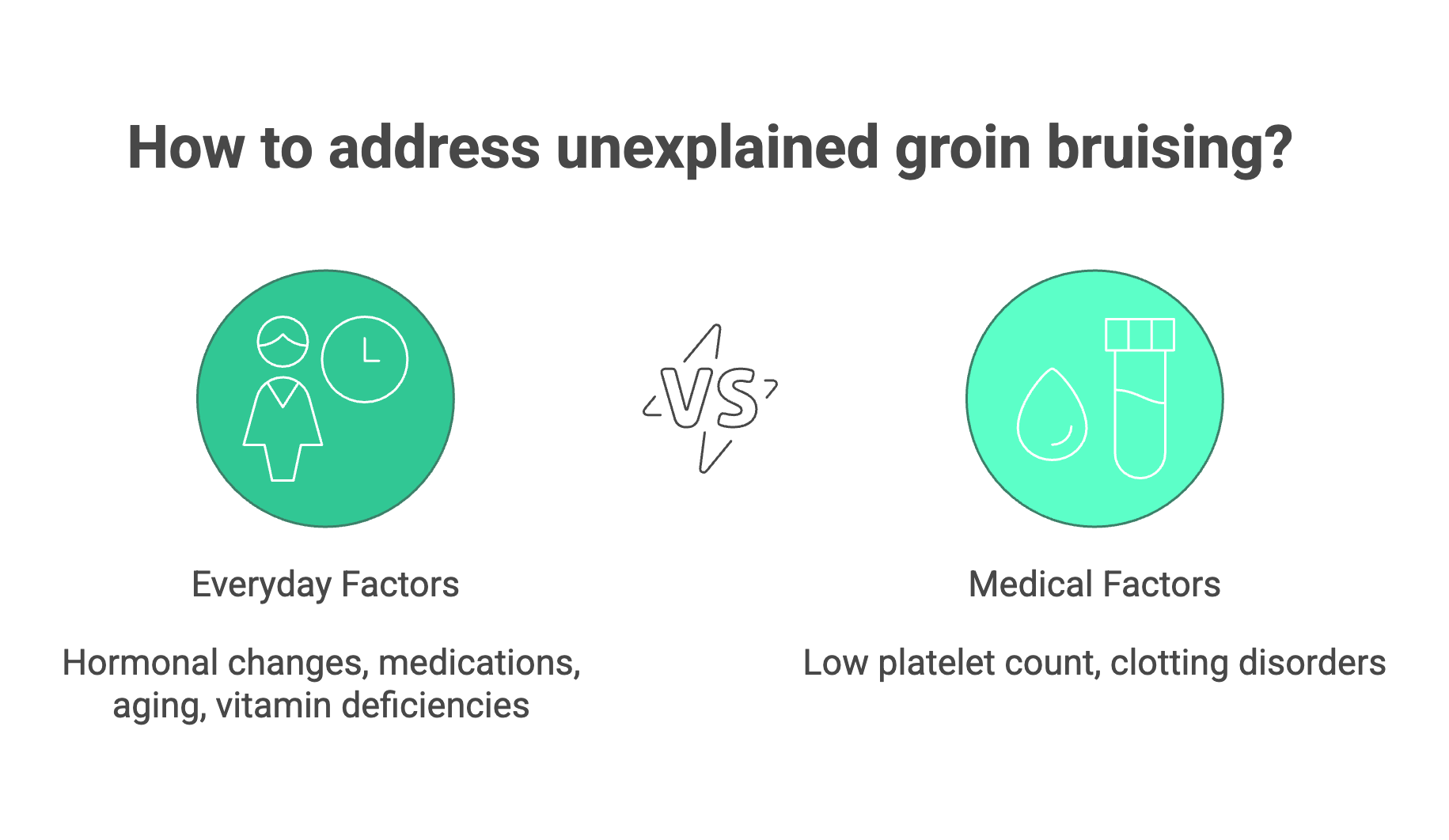
Here are some everyday factors that can lead to unexplained groin bruising:
- Medications like blood thinners, aspirin, or ibuprofen reduce your blood's ability to clot.
- Hormonal changes during your menstrual cycle can make blood vessels more fragile.
- Aging thins skin and weakens protective fat layer underneath.
- Low levels of vitamin C, vitamin K, or iron can affect clotting and bruise formation.
If bruises are appearing frequently without a clear cause, mention it to your doctor. A simple blood test can check your platelet count and clotting factors.
Could It Be Related to a Pelvic or Reproductive Issue?
Sometimes bruising near groin in women can be connected to conditions in pelvic region. This uncommon, but good to be aware of.
Ruptured ovarian cysts can cause internal bleeding that tracks down into groin or inner thigh. This usually comes with sudden sharp pelvic pain on one side. If you are curious about how ovarian cysts develop, this guide on ovarian cyst sizes explains it clearly.
Endometriosis another condition where tissue similar to uterine lining grows outside uterus. In rare cases, this tissue can affect groin region and cause localized pain or discoloration. Women with endometriosis and heavy bleeding may also develop anemia, which contributes to easier bruising. If you have painful or heavy periods alongside unusual bruising, understanding connection between endometriosis and blood clots may offer helpful context.
Are There Rare but Serious Causes?
In uncommon situations, a groin bruise can point to something that needs medical attention.
Bleeding disorders like von Willebrand disease or thrombocytopenia (low platelet count) can cause bruises without trauma. Women with these conditions often notice frequent nosebleeds, heavy periods, and bruises in unusual places. A large review of studies found that many bleeding disorders go undiagnosed for years because symptoms seem minor.
Deep vein thrombosis (a blood clot in a leg or pelvic vein) can sometimes cause swelling and skin discoloration in groin and thigh. This a medical emergency if accompanied by leg pain, warmth, or sudden swelling in one leg.
In very rare cases, groin bruising can be linked to blood cancers like leukemia or lymphoma. If bruising comes with unexplained weight loss, fatigue, swollen lymph nodes, or fevers, seek medical evaluation promptly.
How Do You Treat a Groin Bruise at Home?
Most groin bruises respond well to simple home care. Here is what can help during first 48 hours:
- Apply a cold compress wrapped in a cloth for 15 to 20 minutes at a time, several times a day. This slows bleeding under skin and reduces swelling.
- Rest area and avoid activities that strain your inner thigh or hip.
- Wear supportive, comfortable underwear to reduce friction.
After first two days, a warm compress can encourage blood flow and help bruise break down faster. Most bruises go through a color change from dark purple to greenish yellow and fade within two to three weeks.
When Should You See a Doctor?
Most groin bruises are nothing to worry about. But certain signs deserve prompt attention:
- The bruise is spreading rapidly or getting much larger within hours.
- You have severe pain that worsens despite resting.
- There numbness or tingling extending down your thigh.
- The bruise appeared after starting a new medication.
- You are getting unexplained bruises in multiple places.
- You have a fever, swollen lymph nodes, or unexplained weight loss.
Your doctor may order an ultrasound to look for deeper injuries. Blood tests can check your clotting ability and rule out underlying conditions.
The Bottom Line
A bruise in groin area is usually harmless and heals on its own with basic home care. Common causes include minor bumps, muscle strains, and medication side effects. Women may also be more prone to bruising due to how their skin and blood vessels are structured. In rare cases, unexplained groin bruising can signal a bleeding disorder, pelvic condition, or something that needs further investigation. If bruise is spreading, painful, or shows up alongside other unusual symptoms, your doctor can help figure out what going on and guide you toward right care.
Health Companion
trusted by
6Mpeople
Get clear medical guidance
on symptoms, medications, and lab reports.