
Health Library
Best Pimple Patches for Cystic Acne: What Actually Works
February 21, 2026
Question on this topic? Get an instant answer from August.
Most regular pimple patches will not do much for cystic acne. That is because cystic breakouts sit deep under the skin, far below where standard hydrocolloid patch can reach. But certain types of patches can still help, and knowing which ones to choose makes all the difference.
Why Don't Regular Pimple Patches Work on Cystic Acne?
Standard pimple patches are made of hydrocolloid, moisture absorbing material originally used in wound care. They work by drawing fluid, pus, and oil out of pimple through surface of skin. A narrative review on use of hydrocolloids in dermatology confirms that these patches are effective for surface level acne lesions, but notes that published research on their use for deeper acne is still limited.
The problem with cystic acne is that inflammation and infection happen deep within skin. There is no open surface for hydrocolloids to pull from. That is why basic patch often just sits on top of cystic bump without doing much.
Having said that, plain hydrocolloid patch can still protect area from picking and rubbing. It creates physical barrier that keeps bacteria and dirt out. It also keeps your hands off spot, which helps prevent scarring. So while it will not treat cyst, it can support healing in small but real way.
What Type of Pimple Patch Works Best for Cystic Acne?
If you want a patch that can actually reach deep cystic pimple, look for microneedle patches. These patches have tiny dissolving needles on one side, usually made from hyaluronic acid. The needles are so small you may barely feel them. They create micro channels in skin and deliver active ingredients below surface where cystic acne lives.
The most helpful active ingredients to look for in microneedle patches include:
- Salicylic acid, which helps break down clogged pores and reduce inflammation from within.
- Niacinamide (vitamin B3), which helps calm redness and supports skin barrier.
- Tea tree oil, which has natural antibacterial properties that may help fight acne causing bacteria.
- Hyaluronic acid, which hydrates surrounding skin and supports healing process.
These ingredients can make noticeable difference when they are delivered deeper into skin rather than sitting on surface.
One thing to keep in mind is that microneedle patches work best on early stage cystic breakouts. If cyst is already large, inflamed, and very painful, a patch alone is unlikely to resolve it. That is sign you may need professional treatment.
Can Medicated Patches Help with Deep Breakouts?
Yes, to some degree. Medicated patches are standard hydrocolloid patches that have been infused with active ingredients like salicylic acid or benzoyl peroxide. They sit on surface but slowly release these ingredients into skin.
They are step up from plain hydrocolloid patches for cystic acne. The salicylic acid can help soften clogged material inside pore. Benzoyl peroxide can help kill bacteria beneath surface. However, they cannot penetrate as deeply as microneedle patches.
If your cystic breakouts are mild to moderate, a medicated patch may help reduce size and redness over several hours. For deeper or more painful cysts, microneedle patches or prescription treatments are usually better option. If you also deal with other types of acne bumps alongside your cystic breakouts, this guide on closed comedones vs fungal acne can help you tell them apart and treat each one properly.
How Should You Use Pimple Patches on Cystic Acne?
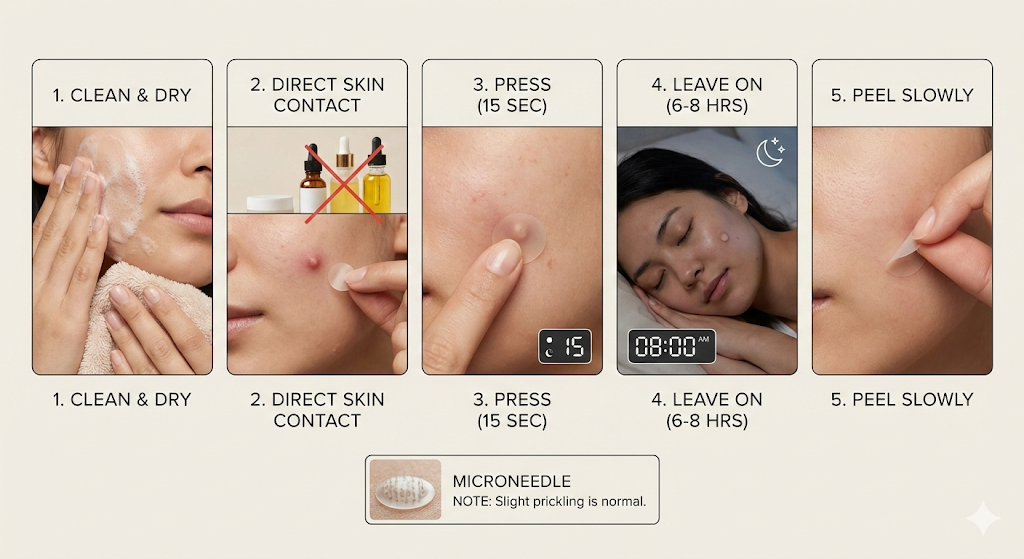
Getting most out of patch comes down to how you apply it.
1. Wash your face with gentle cleanser and pat area completely dry.
2. Do not apply any serums, moisturizers, or oils before patch. The patch needs direct contact with clean, dry skin to stick properly and deliver its ingredients.
3. Place patch directly over cyst and press gently for about 15 seconds.
4. Leave patch on for at least 6 to 8 hours. Overnight use works best.
5. Remove patch carefully by peeling it slowly from one edge. Do not pull it off quickly, as this can irritate skin.
For microneedle patches, you may feel slight prickling sensation when you first press it on. This is normal and should go away within few minutes. That feeling means tiny needles are making contact with your skin.
When Should You See Doctor Instead of Using Patches?
Pimple patches have their limits. They are helpful tool for mild cystic breakouts, but they are not replacement for medical treatment when things get serious.
Here are some signs that you should talk to dermatologist:
- Your cystic acne keeps coming back in same spots.
- The cysts are large, very painful, or warm to touch.
- Otc treatments including patches have not helped after several weeks.
- You are starting to notice scarring or dark marks left behind after breakouts heal.
- Your breakouts are spreading or getting worse over time.
For severe or persistent cystic acne, dermatologist may recommend prescription treatments. These can include oral antibiotics to reduce inflammation and bacteria, isotretinoin (a powerful retinoid) for cases that do not respond to other treatments, hormonal therapies for women whose breakouts are tied to their menstrual cycle, or intralesional corticosteroid injections that can shrink painful cyst within 24 to 48 hours.
These treatments go far deeper than any patch can reach. If you are experiencing itchy or irritated cystic breakouts, this article on why acne itches explains what drives that sensation and how to manage it.
Health Companion
trusted by
6Mpeople
Get clear medical guidance
on symptoms, medications, and lab reports.