
Health Library
Albuterol Inhaler Dose for Adults: How Much to Take and How Often
February 15, 2026
Question on this topic? Get an instant answer from August.
The standard albuterol inhaler dose for adults is two puffs (180 mcg) every 4 to 6 hours as needed. Each puff delivers 90 micrograms of albuterol, so two puffs give you a total of 180 micrograms per dose. You should not exceed 12 puffs in a 24 hour period unless your doctor has specifically told you otherwise.
Albuterol is a rescue inhaler. That means it is designed for quick relief when you are having trouble breathing, not for daily prevention. It works by relaxing muscles around your airways so they open up, and most people start feeling relief within minutes. The effects typically last about 4 to 6 hours.
How Should You Take Your Two Puffs?
Getting right technique matters just as much as dose itself. If you do not inhale medication properly, you may not get full amount into your lungs where it needs to go.
Here is a step by step approach that helps you get most out of each dose:
- Shake inhaler well before each use (this applies to HFA inhalers like Ventolin HFA and ProAir HFA, but not to dry powder inhalers like ProAir RespiClick).
- Breathe out fully, away from inhaler.
- Place mouthpiece in your mouth and close your lips around it.
- Press down on canister while breathing in slowly and deeply.
- Hold your breath for about 10 seconds, then breathe out slowly.
- If you need a second puff, wait about one minute before repeating.
That one minute pause between puffs gives first dose time to begin opening your airways, which helps second puff reach deeper into your lungs.
What About Dose for Exercise?
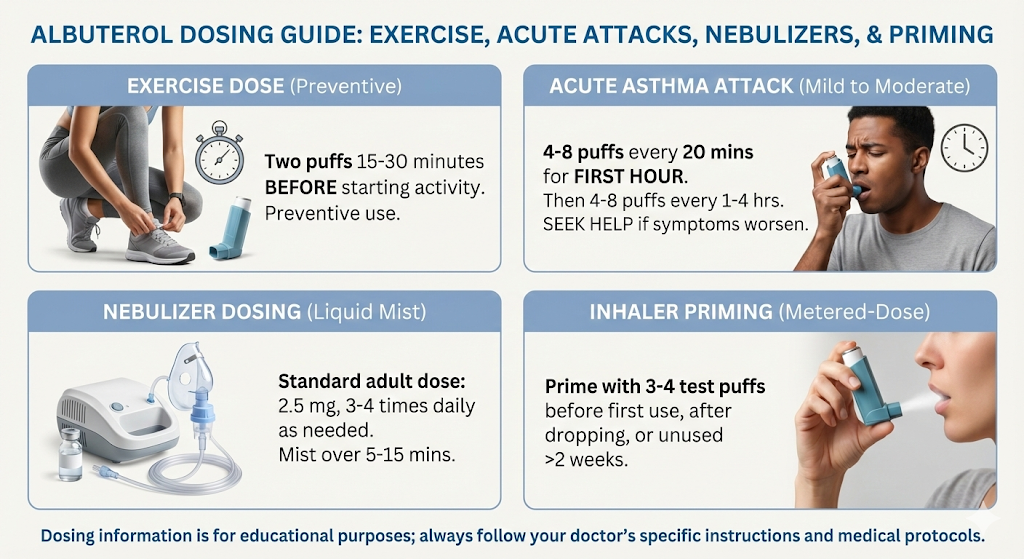
If you use albuterol to prevent breathing problems during exercise, recommended dose is same:two puffs taken 15 to 30 minutes before you start. This gives medication time to open up your airways before physical activity begins.
These two puffs before exercise are considered a preventive dose. If your doctor has you on a daily asthma management plan, pre exercise puffs generally do not count toward your daily rescue use. But if you find that you still wheeze or struggle to breathe even after taking albuterol before exercise, that is worth bringing up with your doctor. It could mean your asthma needs a different type of controller medication.
What Happens During an Asthma Attack?
During a mild to moderate asthma attack, the dosing can be more aggressive than everyday use. According to clinical guidelines, the recommended approach for an acute flare 4 to 8 puffs every 20 minutes for the first hour. After that first hour, the dose typically settles back to 4 to 8 puffs every 1 to 4 hours as needed, depending on how you respond.
This higher dosing during an attack guided by medical protocols and different from your normal as needed use. If you are ever in a situation where you need to take this many puffs, its a sign that you need medical attention. If your symptoms do not improve after the initial doses, or if they are getting worse, go to the emergency room or call 911.
What About Nebulizer Dosing?
Some adults use albuterol through a nebulizer instead of a handheld inhaler. A nebulizer turns the liquid medication into a fine mist that you breathe in over about 5 to 15 minutes through a mouthpiece or mask. The standard adult nebulizer dose is 2.5 mg given 3 to 4 times a day as needed.
Nebulizers are sometimes easier for people who have difficulty coordinating press and breathe technique of a handheld inhaler. Your doctor can help you decide which method works best for you.
Do You Need to Prime Your Inhaler?
Yes, if it a metered dose inhaler ( kind you shake). You need to prime it before using it for first time by shaking it and spraying 3 to 4 test puffs into air, away from your face. You also need to re prime it if you have not used it in more than two weeks, or if you drop it. This step clears any buildup and makes sure next puff delivers correct amount of medication.
Dry powder inhalers like ProAir RespiClick do not need to be shaken or primed same way. But they do need to be kept dry, so never wash them or get them wet.
What Are Common Side Effects?
Most side effects from albuterol are mild and tend to go away as your body adjusts. The most commonly reported ones include shakiness or tremors, nervousness, a faster heartbeat, and headache. Some people also notice a sore throat or slight dizziness.
These effects are more likely when you take higher doses or use inhaler more often than recommended. If you notice a very fast or irregular heartbeat, chest pain, or worsening breathing after using albuterol, contact your doctor or seek emergency care.
How Do You Know If You Are Using Too Much?
This is an important question. Albuterol is meant to be a rescue tool, not a daily crutch. Asthma guidelines use what sometimes called "Rule of Two". If your asthma is well controlled, you should need your rescue inhaler no more than two times a week for symptom relief.
If you find yourself reaching for your inhaler three or more days per week, it is a signal that your asthma is not well controlled. This does not mean albuterol is not working. It means you likely need a different or additional medication, like an inhaled corticosteroid, to manage underlying inflammation that is driving your symptoms.
Research has shown that people who fill three or more albuterol canisters in a year have roughly double risk of an asthma related emergency room visit or hospitalization compared to those who use it less often. So overuse is not just inconvenient. It can actually mean your asthma is heading in a dangerous direction.
When Should You Talk to Your Doctor?
Talk to your doctor if your albuterol does not seem to be relieving your symptoms way it used to, if you are using it more frequently than before, or if you are going through inhalers faster than expected. A medication that used to work well becoming less effective is often an early sign of worsening asthma that needs a treatment adjustment, not just more rescue puffs.
Health Companion
trusted by
6Mpeople
Get clear medical guidance
on symptoms, medications, and lab reports.